
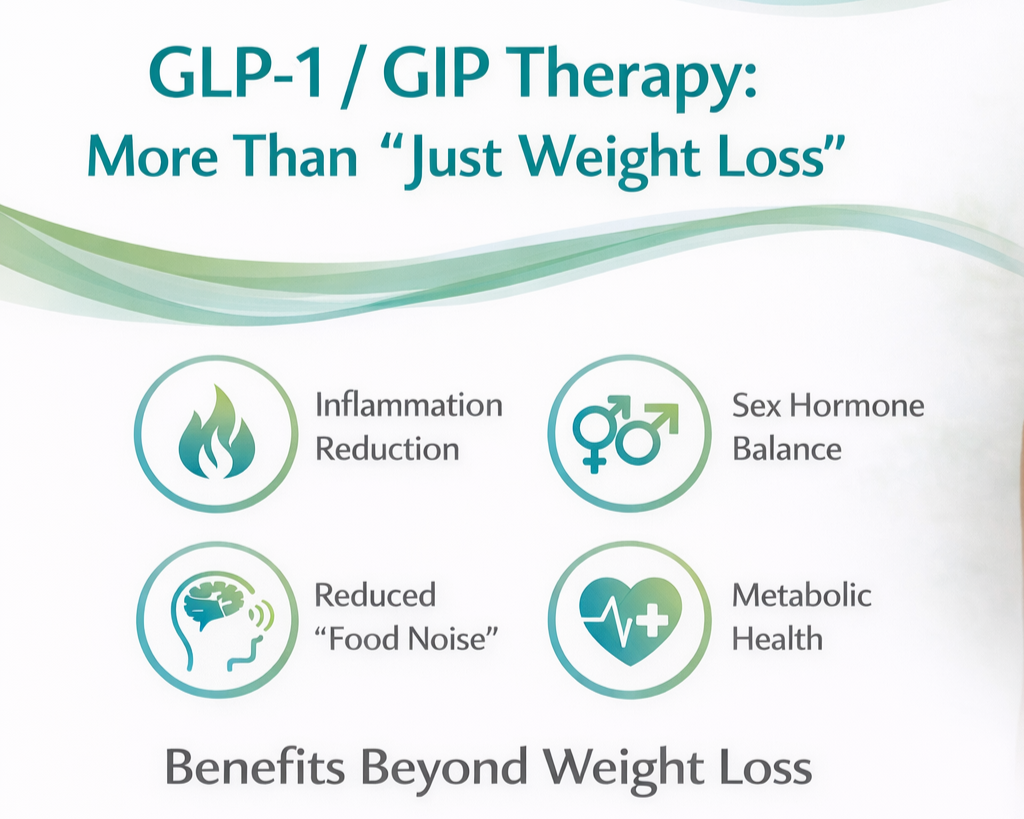
GLP-1 / GIP Therapy: More Than “Just Weight Loss”
Beyond weight loss, GLP-1 / GIP medications may support metabolic health, reduce inflammatory signaling, and improve hormone balance. The benefits are broader than most people realize.
GLP-1 and GIP medications are often talked about as weight-loss drugs — but their benefits extend far beyond the number on the scale. These therapies influence metabolism, inflammation, hormones, and even the way the brain processes hunger.
Let’s take a closer look at what these medications really do.
Understanding GLP-1 and GIP
GLP-1 (glucagon-like peptide-1) and GIP (glucose-dependent insulinotropic polypeptide) are natural gut hormones that help regulate:
Blood sugar
Insulin response
Appetite and satiety
Gastric emptying
Energy balance
Modern medications mimic or enhance these hormones, creating therapeutic effects that impact multiple systems throughout the body.
Weight Loss: A Powerful — But Not Sole — Benefit
Yes, GLP-1/GIP therapy can lead to significant, medically meaningful weight loss. Patients often experience:
* Reduced appetite
* Earlier fullness
* Fewer cravings
* Improved metabolic markers
But focusing only on weight loss misses a much bigger story.
GLP-1s and Inflammation Reduction
Chronic low-grade inflammation is a major driver of many conditions, including:
Insulin resistance
Cardiovascular disease
Fatigue
Joint pain
Hormonal dysfunction
Emerging research shows GLP-1 therapies may help reduce inflammatory signaling. Clinically, many patients report:
* Improved energy
* Less joint discomfort
* Better metabolic stability
Lower inflammation can translate into better overall health — not just body composition changes.
The Impact on “Food Noise”
Many patients describe a constant mental chatter around food:
“What should I eat?”
“I shouldn’t eat that…”
“I’m still hungry.”
GLP-1/GIP medications often quiet this “food noise.”
Instead of fighting cravings all day, patients experience:
Reduced obsessive thoughts about food
Less emotional eating
Easier portion control
This neurological effect can feel life-changing — especially for those who’ve struggled for years despite strong willpower.
GLP-1 Therapy and Sex Hormones
Hormones do not operate in isolation.
Excess weight and insulin resistance can disrupt:
Estrogen balance
Testosterone levels
SHBG (sex hormone-binding globulin)
Ovulatory function
By improving insulin sensitivity and reducing visceral fat, GLP-1/GIP therapy may indirectly support:
✔ More stable estrogen/testosterone levels
✔ Improved PCOS parameters
✔ Better metabolic-hormonal balance
Some patients notice improvements in:
Cycle regularity
Energy
Libido
Mood stability
These changes reflect deeper metabolic and endocrine shifts.
Metabolic Health Improvements
Beyond weight reduction, patients may see:
* Lower A1C
* Improved fasting glucose
* Better lipid profiles
* Reduced insulin resistance
These benefits are strongly tied to long-term disease prevention.
A Tool — Not a Shortcut
GLP-1/GIP medications are not magic and not meant to replace lifestyle habits.
They work best alongside:
Nutrition optimization
Strength training
Sleep support
Hormone evaluation (when indicated)
Used thoughtfully, these therapies help correct biological barriers that lifestyle changes alone may not overcome.
The Bigger Picture
GLP-1/GIP therapy is about improving:
* Metabolic function
* Hormonal balance
* Inflammation status
* Relationship with food
* Overall health trajectory
Weight loss is often the most visible effect — but it’s rarely the only meaningful one.
Considering GLP-1 / GIP Therapy?
At Fusion Health, we evaluate whether this therapy is appropriate based on:
Medical history
Metabolic markers
Hormonal factors
Individual goals
Because the right treatment is never one-size-fits-all.

Your Thyroid Labs Are “Normal”—But You Still Feel Awful
High-normal TSH symptoms in perimenopausal women
Your PCP tested your thyroid and told you your labs were normal. Let’s break it down.
Standard thyroid testing usually starts with TSH. If your TSH is “normal”—even at the higher end of the range—most PCPs won’t order more detailed testing.
The result? Many women in perimenopause are stuck with classic hypothyroid symptoms but are told everything looks fine, leaving them without treatment options.
Why High-Normal TSH Matters in Perimenopause
Perimenopause causes estrogen levels to fluctuate, and estrogen plays a key role in thyroid hormone metabolism. These fluctuations can destabilize thyroid function and amplify symptoms, including:
Fatigue
Mood swings
Weight gain
Hair loss
Constipation
Brain fog
Even a “high-normal” TSH can be clinically significant in this context.
Risks of Leaving High-Normal TSH Untreated
Ignoring thyroid dysfunction in perimenopause carries meaningful risks:
1. Progression to overt hypothyroidism
Without monitoring or intervention, mild dysfunction can worsen over time.
2. Cardiovascular risk
High TSH is linked to dyslipidemia, atherosclerosis, and increased cardiovascular events—especially in younger and middle-aged women.
3. Neurocognitive effects
Fatigue, depression, and cognitive impairment are more common and can exacerbate menopausal symptoms.
4. Bone health
Thyroid dysfunction accelerates bone loss, compounding menopausal osteoporosis risk.
Takeaway
A “normal” TSH doesn’t always mean optimal thyroid function, especially for women navigating perimenopause. If you’re experiencing these symptoms despite normal labs, a deeper evaluation of thyroid, hormone, and metabolic patterns may provide answers.
I specialize in hormone and metabolic care for women navigating this phase of life through a private-pay model, allowing for detailed evaluation and personalized follow-up.